Wednesday, April 28, 2010


Major Themes, Influences, and Artistic Style


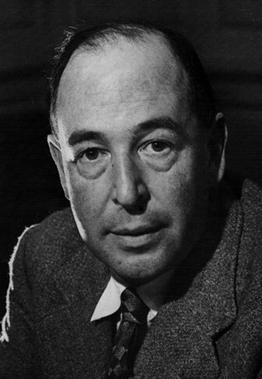
As one can easily see, C.S. Lewis was one of the most influential Christian writers of the 20th century, and his work continues to inspire people and work wonders in lives. However, Lewis wasn't always a strong, courageous Christian writer; he was raised in church but became what some people call a "blaspheming atheist." This means that C.S. Lewis would go around purposely trying to convince people there wasn't a God; he was very open about it. One influence of Lewis' was that he left behind the legacy that even if you are certain there isn't a God, you can still be convinced otherwise, no matter how devoted to atheism. Therefore, because of this critical change in Lewis' life, he wrote in an apologetic form frequently in his books, and went on to write many books on Christianity, some of which didn't talk about the issue directly, but address it with subliminal messages. For instance, The Chronicles of Narnia, Lewis wrote this series based on the theme of Christianity but made them fantasy books for children. C.S. Lewis, earlier in his career, also wrote books specializing in medieval literature, such as The Allegory of Love, which helped influence the understanding of literature greatly. Also, one of Lewis' ideals present in his book The Four Loves is that friendships are based on the agreement of what they see as true, and sharing that bond. Overall, C.S. Lewis was an intelligent man that helped shape our world in many ways.


"C.S. Lewis Classics ::: About C.S. Lewis." C.S. Lewis Classics ::: Homepage. HarperCollins Publishers, 2008. Web. 29 Apr. 2010. http://www.cslewis.com/about.aspx.


Tolson, Jay. "The Curious Life and Prodigious Influence of C. S. Lewis, the Man behind The Chronicles of Narnia - US News and World Report." US News & World Report - Breaking News, World News, Business News, and America's Best Colleges - USNews.com. 4 Dec. 2005. Web. 29 Apr. 2010. .

Monday, April 26, 2010

Career


Career

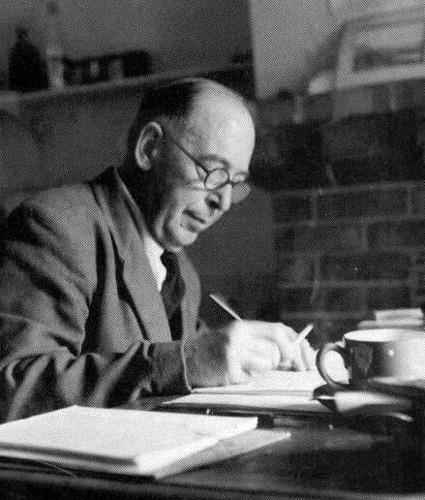
C.S. Lewis began his successful career when he was awarded a scholarship to the University of Oxford. This is where he found his passion for mythology, but soon had to take a break and helped fight in World War I. After his return to the University Lewis was able to achieve the highest honors in three different areas of study, making him one of the most distinguished students on the campus. In May, 1925, C.S. Lewis was appointed Fellow and Tutor in English Literature at Oxford University and served in that position until 1954. Lewis spent 29 years at the same position; he must have really enjoyed what he did. For example, he also wrote The Allegory of Love in 1936 about medieval literature. I sure as heck couldn't write a whole book over that, but that just goes to prove that Lewis was an intellectual and a reader. In addition, he helped create the literary group called "The Inklings", which has become very famous today. Not only did Lewis accomplish all this, but he also wrote multiple books and series; including The Space Trilogy and The Chronicles of Narnia, along with many other books on Christianity. His book The Last Battle also earned the greatest honor for children's literature in the United Kingdom, the Carnegie Award.


"C.S. Lewis Classics ::: About C.S. Lewis." C.S. Lewis Classics ::: Homepage. HarperCollins Publishers, 2008. Web. 27 Apr. 2010. http://www.cslewis.com/about.aspx.

Gresham, Douglas. "Frequently Asked Questions." Into the Wardrobe - a C. S. Lewis Web Site. Ed. John Visser. 1994-2010. Web. 27 Apr. 2010. .

Monday, April 12, 2010


Biography


The beloved author of The Chronicles of Narnia, C.S. Lewis, was born in Belfast, Ireland on November 29, 1898. He was raised in a home with a plethora of books, go figure, and read all the time. Then in 1908 a tragedy struck, his mother died. This completely broke Lewis' heart. However, in 1913, he enrolled at Malvern College and at the age of 15 abandoned Christianity and became an atheist. Little did he know that this was just the beginning of God's transformation in his life. In 1916 he attended Oxford University under a scholarship but just a year later halted his studies to join the British Army for World War I. Wounded in April 1918, he recovered and was discharged in 1919 and resumed his studies. At the same time he looked after his roommate during the war, Paddy Moore's, family as Moore had asked Lewis to do. 1931 was a monumental year for Lewis, as this was the year that he converted back to Christianity, and has been a very inspiring Christian writer. The funny thing is that Lewis was such an avid atheist and the more he tried to share and prove atheism to people, the more God drew him closer to Him. Like Lewis said, "A young man who wishes to remain a sound atheist cannot be too careful of his reading." Then in 1936, C.S. Lewis published his first successful writing, The Allegory of Love, which helped people understand the importance of allegory in medieval literature. However, everyone knows about his series The Chronicles of Narnia, which was published from 1950-1956, and started with the most popular book and now a movie, The Lion, the Witch, and the Wardrobe. In 1956, Lewis got married to Joy Gresham, but she passed away only four years later due to bone cancer. Still, Lewis kept on watching after her two sons, Douglas and David, but died shortly after Joy on November 22, 1963. His work has been even more influential after his death and he will always be remembered as a brilliant writer and a wonderful example of how God works in people's lives.


Works Cited


"C.S. Lewis Classics ::: About C.S. Lewis." C.S. Lewis Classics ::: Homepage. HarperCollins Publishers, 2008. Web. 12 Apr. 2010. http://www.cslewis.com/about.aspx.


Edwards, Bruce L. "C. S. Lewis: A Modest Literary Biography and Bibliography." CSL Resources. Bruce L Edwards, 2005. Web. 12 Apr. 2010. http://personal.bgsu.edu/~edwards/biobib.html.


"C. S. Lewis Quotes." Famous Quotes and Quotations at BrainyQuote. BrainyMedia.com, 2010. Web. 12 Apr. 2010. http://www.brainyquote.com/quotes/authors/c/c_s_lewis.html.